Once you’ve made a one-off card payment, we can’t cancel it. If there’s a problem, you can raise a dispute once the payment has left your account and is no longer pending.
You can cancel a payment you’ve authorised to be taken on a future date.
Noticed something unusual on your account? We're here to help.
We understand it can be worrying if you spot some unexpected spending on your account. So to make sure we get you the help you need, follow the steps below.
Visit our unrecognised transactions page to find out how you can get more information about a payment in your transaction list.
First things first: if the transaction is still pending, we're unable to raise a dispute until it’s left your account. View our statements and balances support page for timescales. However, if you suspect the pending payment is fraudulent, please report it to us immediately.
If you recognise the payment, the best place to start is usually the retailer as they may be able to put things right more quickly.
If you can't resolve things with the retailer, or you'd like help understanding your options, we can guide you through the next steps based on whether you paid by debit or credit card.
Paid by credit card? You may have extra protection, which means you could come to us directly. Find out more about Section 75.
Do you recognise the transaction? And are you confident that you've not been scammed?
If you answered YES to both, you need to raise a dispute.
If you answered NO to either one, it could be fraudulent and you should contact us as soon as you can.
Here’s what we may ask for:
invoice with product/service, cost and date of purchase
letters or emails between you and the company, trade association or administrator
the retailer's purchase or booking T&Cs (not web links)
in some cases, we may also need an independent report by an expert.
We know you might not notice an unusual transaction immediately.
For card disputes, you’ll usually need to raise a claim within 120 days of the transaction date or the date you were due to receive the goods or services, whichever is later.
If you paid by credit card, you may have additional protection under Section 75 of the Consumer Credit Act. Longer time limits usually apply.
That’s why it’s always a good idea to review your statements often, to make sure everything is as it should be.
Simply give us a call on 03 456 100 100 and we’ll be happy to help.
We can also help on Chat via our App or Online Banking if it’s about:
Scan the QR code to head to the App to chat with us

Don't have our App yet? You can still chat to us by logging in to Online banking and selecting 'Message us' on the right-hand side of the screen.

The dispute process
Once we’ve agreed to look into your disputed transaction, here’s what you can expect.

We try to resolve your dispute as quickly as possible but sometimes we may need to investigate it further.
If we need to speak to the retailer, they have up to 60 days to respond to us so investigating your claim may take longer. Depending on their response, we may also contact you for more information.

While we investigate your claim, we may give you a temporary credit:
If your claim is unsuccessful, we'll remove the temporary credit. We’ll let you know before this happens.
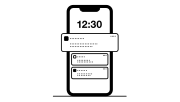
Keep an eye on the account you raised the dispute on, as if we refund the transaction, it'll show as ‘dispute refund’ or ‘my dispute credit’ on your statement.
We may also call, email or post you updates, so watch out for those too.
We may be able to recover money you’ve paid on either a debit or a credit card to a retailer if:
For chargebacks it’s worth bearing in mind:
For chargeback claims, you’ll usually need to raise a claim within 120 days of the transaction date or the date you were due to receive the goods or services, whichever is later.
If you paid by credit card, you may have additional protection under Section 75 of the Consumer Credit Act. Longer time limits usually apply.
If you’ve paid by credit card, you may be able to use Section 75 to get a refund for some or all of the purchase price (also where a chargeback wasn’t possible).
Section 75 will apply if:
If Section 75 applies, we may be equally responsible for your loss, eg if what you paid for isn’t delivered, is faulty or defective, isn’t as described, or has been misrepresented by the supplier.
Section 75 doesn’t apply for:
To bring a claim under Section 75, you'll usually have up to six years from when the issue first happened to bring a Section 75 claim (five years in Scotland), although this can depend on your circumstances.